Saif Ali Khan Attack: What the Mumbai Police Chargesheet Reveals About the January Break-In
Saif Ali Khan Attack: What the Mumbai Police Chargesheet Reveals About the January Break-In
Nearly three months after Saif Ali Khan was attacked inside his Bandra home, the case returned to the headlines in April with a detailed chargesheet filed by Mumbai Police.
The document brought together the investigation into the January 16 incident, including CCTV footage, forensic findings, fingerprints, DNA evidence and statements from people who were inside the house that night. The chargesheet filed by Bandra Police was reported to be more than 1,600 pages long by The Indian Express. (The Indian Express)
For an incident that had initially unfolded in the middle of the night and shocked Bollywood, the chargesheet offered a much clearer account of what investigators believe happened.
What Happened That Night?
On January 16, an intruder entered Saif Ali Khan and Kareena Kapoor Khan’s residence at the Satguru Sharan building in Bandra.
According to the investigation, the accused, identified as Mohammed Shariful Islam Fakir, allegedly entered the home intending to commit theft. He eventually encountered people inside the house, leading to a confrontation during which Saif was stabbed multiple times.
The actor suffered serious injuries, including a wound near his spine, and was taken to Lilavati Hospital. Doctors performed emergency surgery and removed a piece of the knife that had become lodged in his body. Saif was discharged from the hospital on January 21. (India Today)
The attack itself lasted only a short time, but its consequences were much larger. It immediately raised questions about how an intruder had managed to enter a high-security residential building and reach the actor’s apartment.
The Investigation Began With CCTV Footage
The police investigation involved teams examining CCTV footage from several locations.
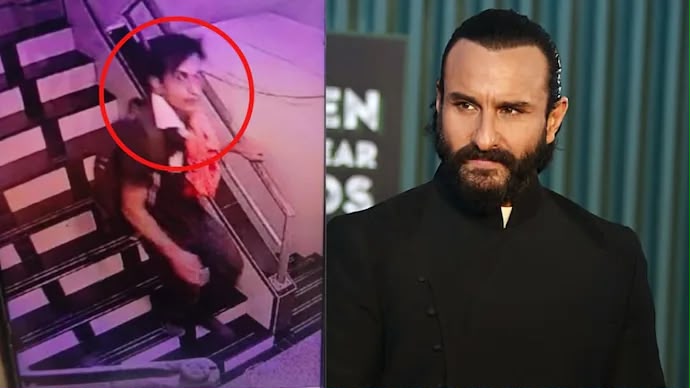
According to the chargesheet, investigators used footage from inside and around Saif’s building, as well as from Bandra railway station and other places the accused allegedly visited after the attack. The police told The Indian Express that around 300 CCTV recordings were sent for forensic examination and that 25 were found to match the accused’s face. (The Indian Express)
Earlier in the investigation, police had also traced the accused through a combination of CCTV footage, a bike registration number and facial-recognition technology. He was eventually arrested from a labour camp in Thane on January 19, three days after the attack. (India Today)
The investigation did not rely on CCTV alone.
Forensic Evidence Became Central to the Case
One of the strongest pieces of evidence cited by police involved the knife.
The weapon was recovered in separate pieces. One part had been removed from Saif’s body during surgery, while another part was subsequently recovered during the investigation. Police said forensic examination established that the recovered pieces belonged to the same knife. (NDTV)
Investigators also reported finding fingerprints associated with the accused at locations inside the residence. Earlier reports said fingerprints were found on a duct pipe allegedly used to enter the building, as well as on doors inside the apartment. (India Today)
A cap recovered from the house was also sent for DNA analysis as part of the investigation.
Taken together, the evidence presented a much more detailed picture than the initial CCTV images that had circulated after the attack.
The Accused Allegedly Surveyed the Area Beforehand
One of the more significant details to emerge from the chargesheet was that the police believe the accused had visited the area before the attempted theft.
According to the chargesheet reported by The Indian Express, he allegedly went to the Bandra area on January 15, the evening before the attack, and stayed near the building while waiting for nightfall. (The Indian Express)
Investigators said he later entered the building through a route involving a duct and pipes rather than simply walking through the main entrance.
That detail is important because it changes the picture of the incident from a completely spontaneous break-in to one that police allege involved at least some prior observation of the location.
Kareena Kapoor’s Statement Added Another Perspective
The chargesheet also included Kareena Kapoor Khan’s account of the night.
According to reports on the document, Kareena was in the house when a member of the staff alerted the family that an intruder was inside the room of their younger son, Jehangir.
Saif went towards the room and confronted the intruder. During the confrontation, he was attacked with the knife. Kareena subsequently urged him to leave the attacker and prioritise getting medical attention and ensuring the family’s safety, according to her statement cited in the chargesheet. (NDTV)
The details made clear that the incident was not simply an attack on a celebrity. It happened inside a family home, with the couple’s children and household staff also present.
The Case Also Changed Life Inside the Khan-Kapoor Home
The immediate aftermath of the attack went beyond Saif’s recovery.
The incident led the family to reassess security around their home, particularly concerns surrounding their children. Reports following the attack also noted increased security measures around the family. (Hindustan Times)
For Saif, the physical recovery was relatively quick compared with the seriousness of the injuries. He spent five days in hospital before returning home, but the circumstances of the attack continued to raise questions about security and access in Mumbai’s celebrity residences.
What the Chargesheet Establishes — and What It Doesn’t
It is important to distinguish between an allegation made in a chargesheet and a fact finally established by a court.
Mumbai Police have presented a substantial body of evidence against the accused, including forensic findings, fingerprints, DNA-related evidence and CCTV footage. The chargesheet alleges that he entered Saif’s home with the intention of theft and attacked the actor when confronted. (India Today)
But the chargesheet is part of the prosecution’s case. The final determination of guilt remains a matter for the court.
That distinction can sometimes get lost when a celebrity is involved, particularly when an incident has already received enormous public attention.
A Case That Began as a Shocking Celebrity Story
When news of Saif Ali Khan’s stabbing broke in January, the immediate focus was understandably on the actor’s condition.
By April, the story had become something different.
The chargesheet shifted attention towards the investigation itself: how the intruder allegedly entered the building, how investigators traced him, what evidence connected him to the residence and what police believe happened during those crucial minutes inside the apartment.
It is a reminder that the most important part of a high-profile crime story often comes after the initial headlines have faded.
For Saif Ali Khan and his family, January 16 was a frightening night at home. For investigators, it became a case built piece by piece through CCTV footage, forensic examination, witness accounts and physical evidence.
And now, with the chargesheet before the court, the next chapter of the case will play out through the legal process rather than the headlines.