Delhi-NCR Pollution Crisis Returns: AQI Nears 500 Just Days After GRAP-III Restrictions Lifted
Delhi-NCR Air Pollution Worsens Again, AQI Nears 500 on AQI.in After GRAP-III Curbs Lifted
NEW DELHI: Delhi-NCR witnessed another deterioration in air quality on November 19, 2026, just two days after authorities revoked Stage III restrictions under the Graded Response Action Plan (GRAP).
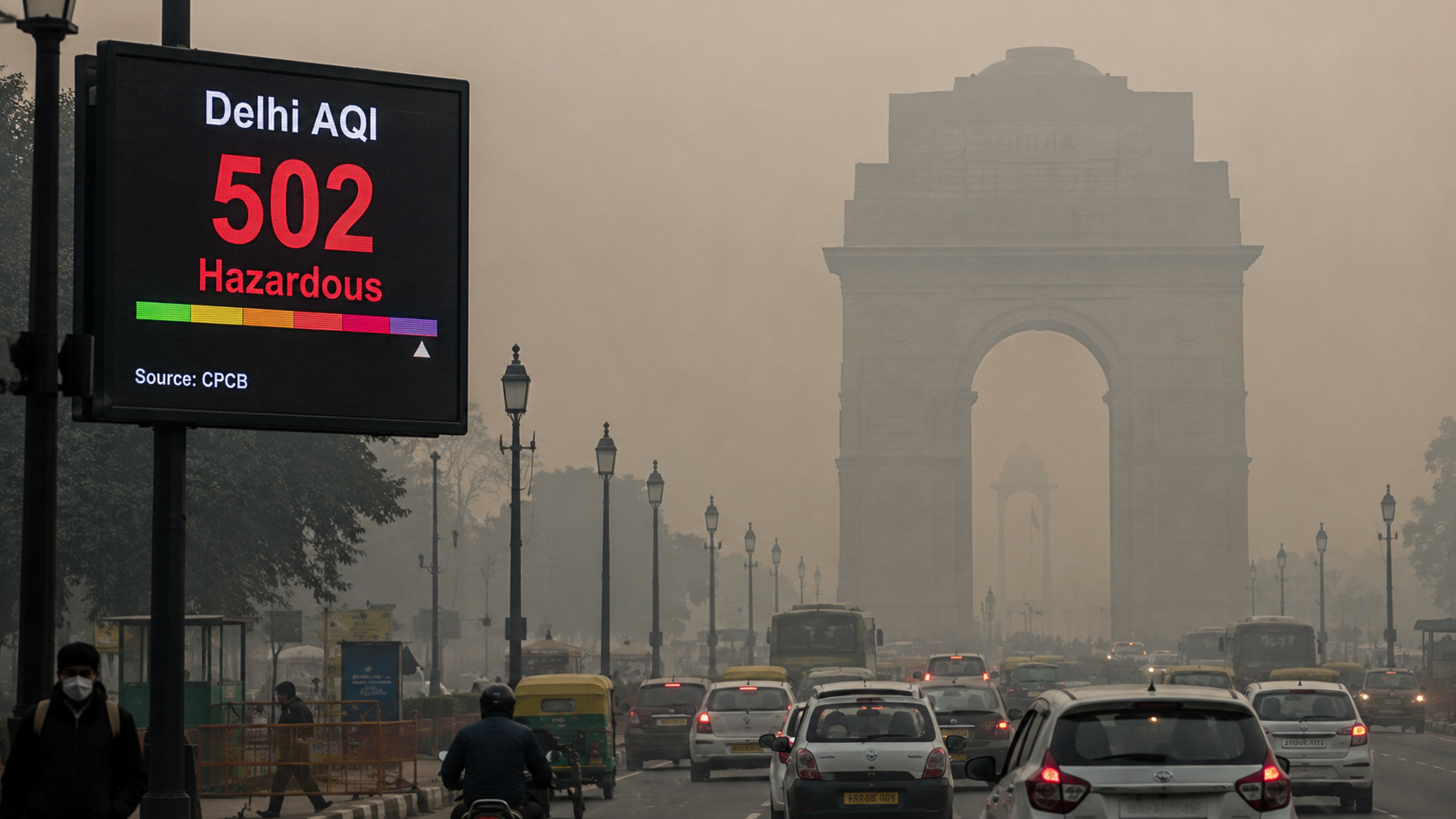
According to AQI.in, Delhi's AQI reached 502 at around 8:30 AM on November 19. However, the official Central Pollution Control Board (CPCB) reading recorded through the CAQM dashboard was 286 at 7:00 AM. The two readings were recorded at different times and through different monitoring platforms and should be viewed separately.
The latest readings have renewed concerns about the effectiveness of pollution-control measures and the challenges of maintaining improved air quality during winter.
Delhi-NCR AQI Rises After GRAP-III Restrictions Are Lifted
The Commission for Air Quality Management (CAQM) revoked GRAP Stage III restrictions on November 17, 2026, following an improvement in Delhi's daily average AQI, which stood at 204 that day.
However, actions under GRAP Stages I and II continued to remain in force. The CAQM also directed implementing agencies to maintain strict monitoring and strengthen pollution-control measures to prevent further deterioration.
Why Is Air Pollution Increasing Again?
Air pollution in Delhi-NCR is influenced by several sources, including vehicle emissions, construction and road dust, industrial activities, waste burning and seasonal agricultural fires.
Weather conditions can also affect the concentration of pollutants. According to forecasts cited by India Meteorological Department (IMD) and Indian Institute of Tropical Meteorology (IITM), light winds and unfavourable atmospheric conditions can limit the dispersal of pollutants, allowing them to accumulate near the ground.
The combination of local emissions and unfavourable weather conditions can contribute to a rise in pollution levels, particularly during winter mornings.
GRAP Restrictions: Are Temporary Measures Enough?
The lifting of GRAP Stage III has brought renewed attention to the effectiveness of emergency pollution-control measures.
GRAP is designed to introduce progressively stricter measures according to air-quality conditions. These include restrictions on construction activities, certain vehicle categories and other pollution-generating operations.
Although emergency restrictions can help address severe pollution episodes, sustained improvement also requires consistent implementation of pollution-control measures throughout the year.
Delhi-NCR Residents Face Continued Air Quality Concerns
Air pollution remains a concern across Delhi and neighbouring areas, including Noida, Greater Noida, Ghaziabad, Gurugram and Faridabad.
Prolonged exposure to polluted air can affect public health, particularly among children, senior citizens and people with existing respiratory or cardiovascular conditions.
Health advisories generally recommend limiting strenuous outdoor activities during periods of severe pollution and following updates issued by official authorities.
What Needs to Change to Control Delhi-NCR Pollution?
Addressing the recurring pollution problem requires a coordinated, year-round strategy involving multiple agencies and neighbouring states.
Key measures include improving public transport, reducing dependence on private vehicles, controlling construction and road dust, monitoring industrial emissions, preventing open waste burning and strengthening inter-state coordination.
Consistent enforcement of existing environmental regulations is also important to reduce pollution sources beyond periods of emergency restrictions.
The Need for Long-Term Pollution Control
The latest deterioration in Delhi's air quality highlights the continuing challenges of managing pollution across the National Capital Region.
The rise in readings after GRAP Stage III restrictions were revoked underlines the importance of monitoring air quality and maintaining preventive measures even when conditions temporarily improve.
For millions of residents, access to clean air remains an important public-health concern. Addressing the sources of pollution throughout the year will be essential to achieving more sustainable improvements in Delhi-NCR's air quality.